
Parks and Public Health
By Karen Nozik
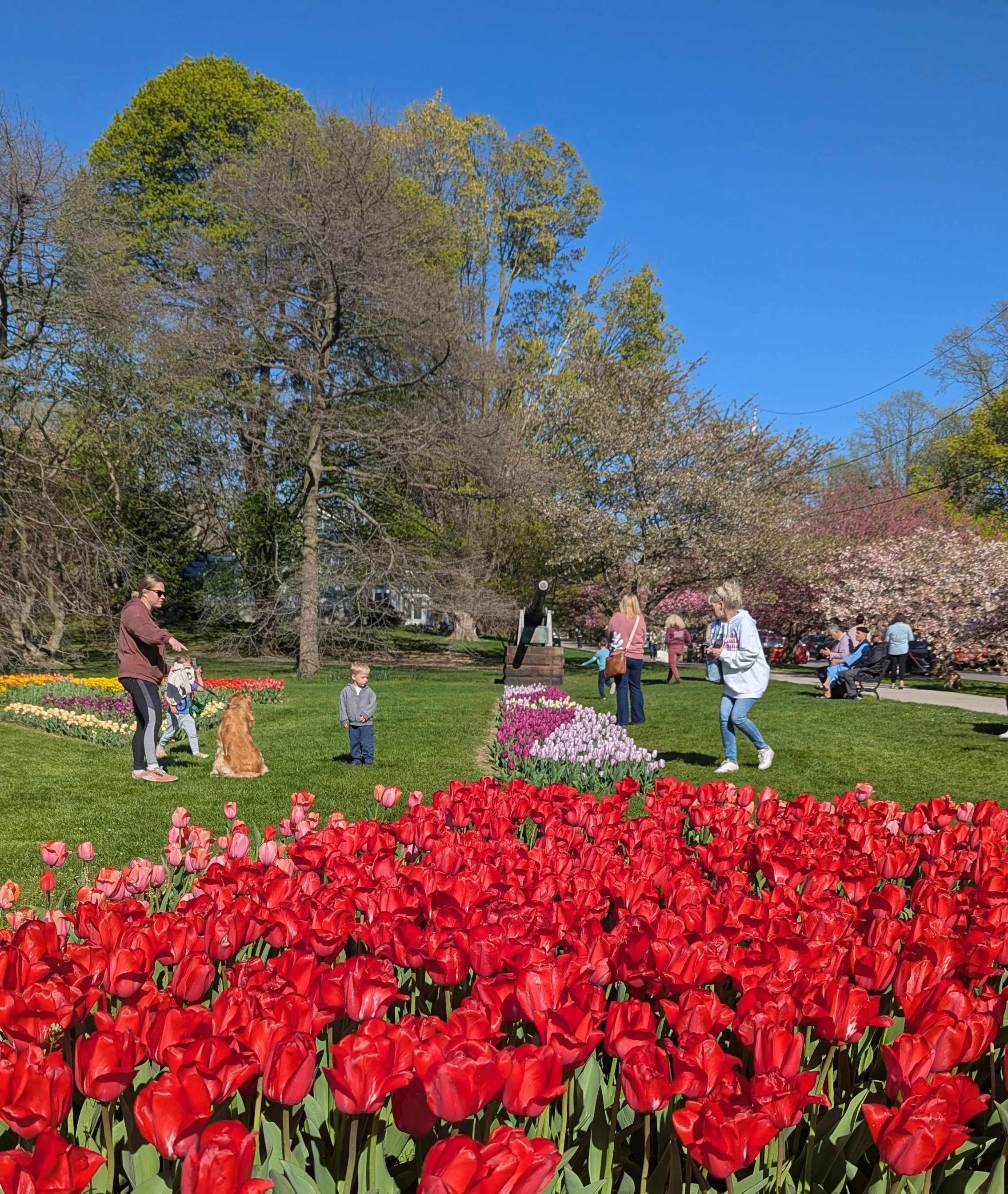
People enjoying the garden beds at Highland Park. Photo courtesy of Becky Timmons.
Today, it seems intuitive that parks and public health go together like soil and seed. It wasn’t always so.
At the turn of the last century, highly communicable and potentially fatal outbreaks of scarlet fever and tuberculosis, posing an especially dangerous threat in dense urban areas. Frederick Law Olmsted was ahead of his time. He viewed landscape architecture as a vital public-health intervention, treating urban parks as the “lungs of the city”— places that provide interaction across social lines, clean air, stress relief and physical renewal.
Before Olmsted, cities generally built individual, isolated parks. Olmsted revolutionized the approach by creating interconnected urban park systems. We Rochesterians are fortunate beneficiaries of one of only four cities in the United States with an interconnected urban park system designed by Olmsted.
Today, we have a greater understanding of the relationship between green space and human health. Parks help moderate temperatures, reduce pollution, manage stormwater, and provide habitat for birds and wildlife. They encourage physical activity and promote social connection, combat loneliness, and offer opportunities for reflection and renewal.
Dr. Daniel P. Croft, Associate Professor of Pulmonary and Critical Care at the University of Rochester Medical Center, views parks as fundamental to healthy communities.
“Our parks are as close as we get to the Amazon rainforest,” he says. “The parks are the lungs of Rochester and a representation of our humanity.”
Dr. Croft’s research focuses on the effects of air pollution and inhaled toxins on pulmonary health, including research into how air pollution may affect people's susceptibility to respiratory viral infections. He points to yet another increasingly important benefit of urban parks: their ability to help protect people from extreme heat.
Climate change increases the health risks associated with extreme heat and environmental pollution — as we have learned from our experience during the COVID-19 pandemic. Parks and green infrastructure are increasingly more than amenities. They are vital public-health assets that can help communities adapt.
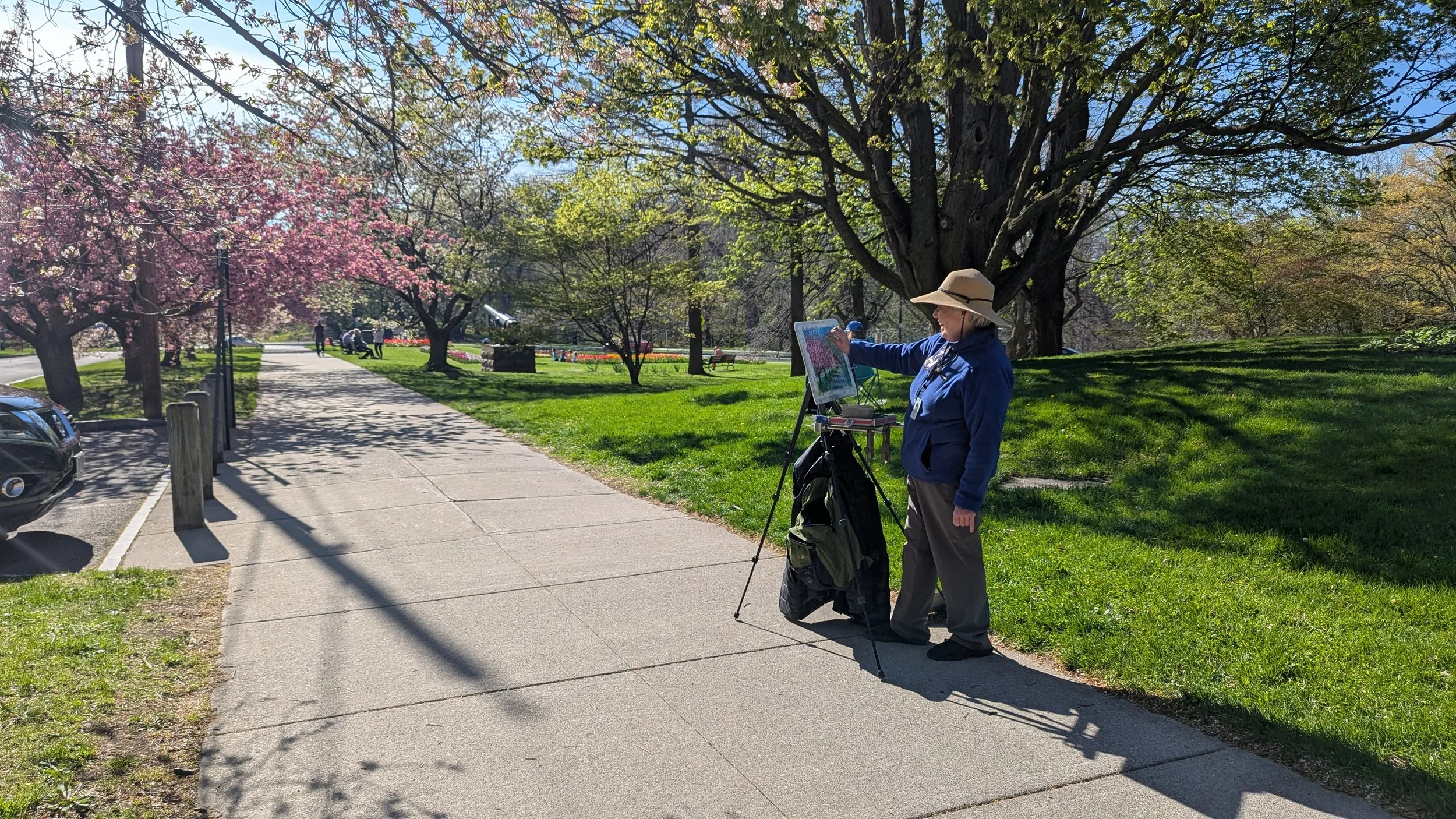
An artist enjoys plein air painting in Highland Park, drawing inspiration from the park's picturesque landscapes and scenic views. Photo courtesy of Becky Timmons.
As climate change and urbanization cause temperatures in cities to rise, parks can function much like natural air conditioners. A 2019 study of large urban parks in Madrid, Spain, examined how far the cooling benefits of parks extended into surrounding neighborhoods during hot summer days.
The researchers found that the parks reduced air temperatures not only within the park itself but that the cooling effect extended hundreds of meters beyond the park, with measurable temperature reductions at distances of approximately 415 to 720 yards ! And benefits weren't only physical. People living closer to the park reported feeling more comfortable in the heat. Even residents living farther away perceived the park as contributing to a more comfortable environment.
In other words, urban parks provide cooling benefits beyond their boundaries. The research points to a larger idea: where we put parks, how extensive they are, and how we design them has consequences for public health.
Most people assume that planting more trees automatically means the creation of cooler conditions, and they do. But research conducted in 13 parks across Montreal found that the arrangement of trees—and the balance between trees and open space—can influence how parks regulate temperature throughout the day and night. The researchers found that large, dense clusters of trees provide the strongest cooling during the day, thanks to shade and evapotranspiration.But those same dense clusters slow the release of heat after sunset, keeping temperatures higher at night.
The study showed that open grass areas in parks present the opposite pattern. They can become hotter during sunny daytime conditions, but cool more quickly after sunset, helping the park release stored heat overnight.The lesson is that good park design requires balance, as Olmsted intuitively appeared to know, and demonstrated through his designs.
A well-designed park provides more than a place to walk or play. It offers shade during a heat wave, absorbs stormwater during heavy rains, filters pollutants, supports biodiversity and wildlife, encourages physical activity and gives people a place to gather, socialize or simply escape the pressures of life.
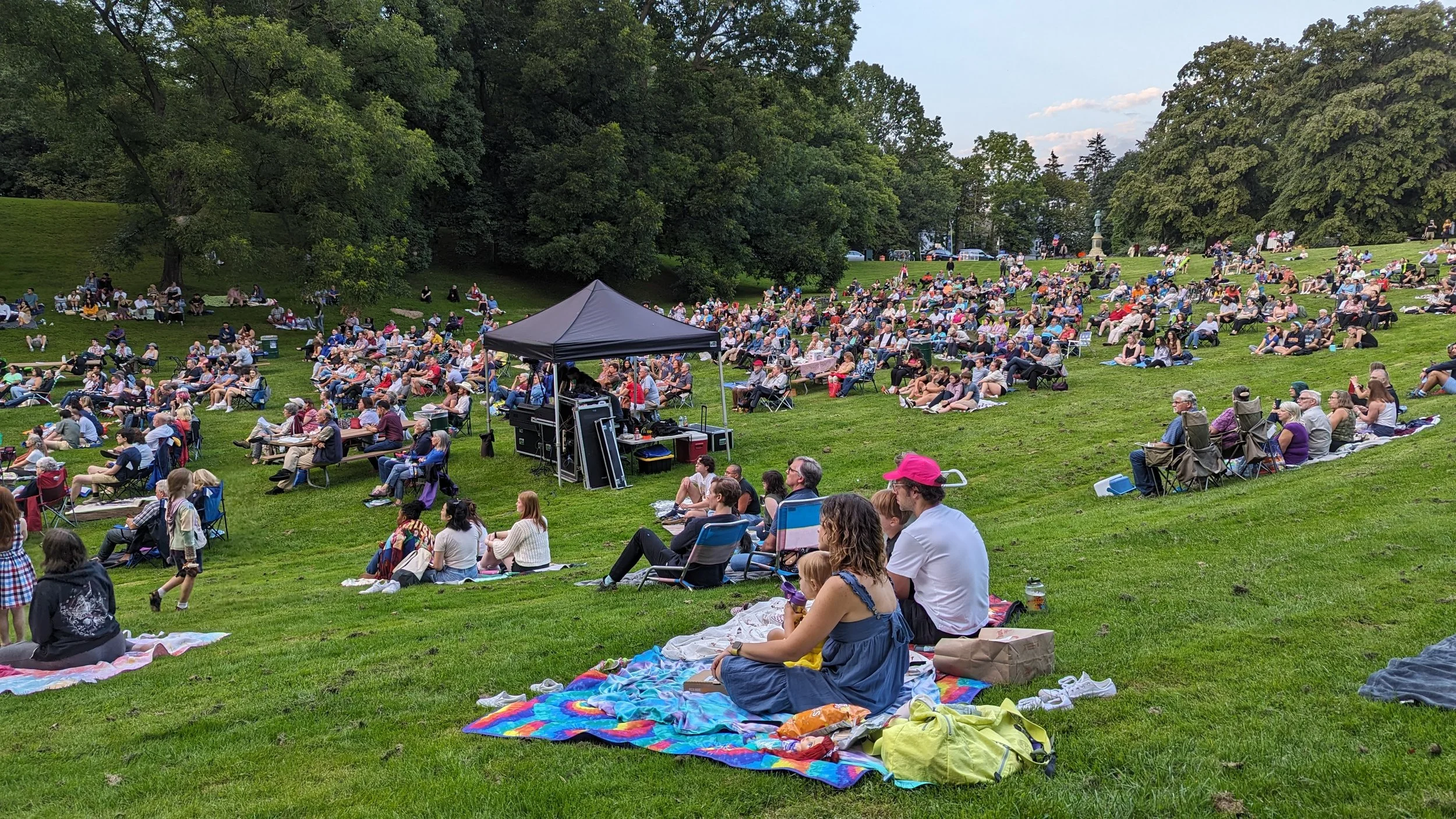
People enjoying a show at the Highland Bowl. Photo courtesy of Becky Timmons.
Olmsted understood many of these connections long before the term “public health” became associated with modern epidemiology. He designed pastoral landscapes—broad meadows, tree-lined paths and quiet woodlands—to soothe the nervous system and counteract the mental exhaustion of industrial life.
He also incorporated rigorous engineering into his landscapes, including clean-water circulation and proper drainage to address stagnant water and other conditions that could contribute to disease.
In short, Olmsted's parks were never simply decorative. They were designed to make cities healthier places to live, and Rochester has an extraordinary inheritance in this regard. Genesee Valley Park, Highland Park, Seneca, Maplewood, Cobbs Hill and the other parks in Rochester's interconnected Olmsted system are not just beautiful landscapes. They are pieces of civic infrastructure that continue to serve the health and well-being of the community more than a century after they were designed.
As our climate changes, we have an opportunity to think about these spaces in new ways: How can we design, maintain and further connect our parks so they do the greatest possible work for the health of our communities?
Neighborhood parks that are well designed, programmed and accessible can help address some of the public-health challenges cities face today—from physical inactivity, violence, and social isolation to extreme heat and environmental stress.
There may be no better public investment than parks – it is what makes parks different from many other public amenities. Their value isn't limited to what happens inside their boundaries. Their benefits can extend into the surrounding neighborhood—and into the health and resilience of the city itself.
Olmsted understood this more than 150 years ago. Today, science is giving us new ways to understand just how right he was.