
More Than a Festival: How Lilacs, Landscape, and Community Shaped a Rochester Tradition
by Megan Hillyard
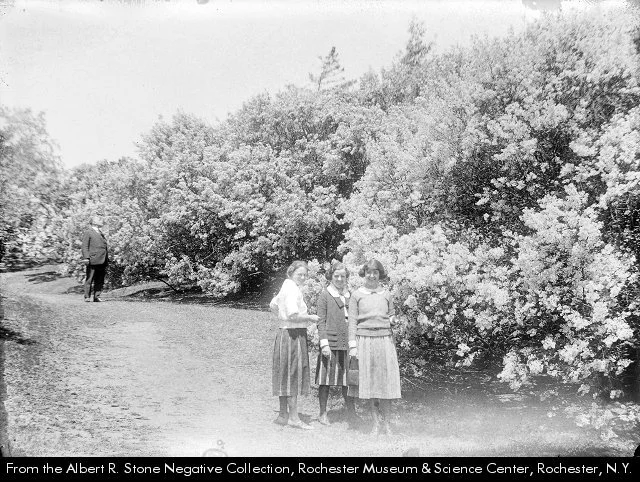
Lilac Sunday at Highland Park ca. 1922. Originally printed in the Rochester Herald, May 24, 1922.
Photo courtesy of the Albert R. Stone Collection, Rochester Museum & Science Center.
Long before you see the blossoms, you smell them.
Each May, the unmistakable fragrance of lilacs drifts across Highland Park, signaling that spring has finally arrived in Rochester. Their perfume carries on the breeze long before the shrubs come into view, drawing hundreds of thousands of visitors to wander the winding paths, admire the blooms, and celebrate one of the city's most beloved traditions—the Rochester Lilac Festival.
For many, the festival means live music, local food, artists, family activities, and the joyful feeling that winter has finally given way to spring. But behind the celebration lies a much deeper story. The festival exists because of Rochester's remarkable horticultural history, the vision of renowned landscape architect Frederick Law Olmsted, and more than a century of dedicated stewardship by horticulturists, park staff, volunteers, and community members who have cared for one of the world's finest collections of lilacs.
The Rochester Lilac Festival is much more than an annual event—it is the living expression of Rochester's identity as the Flower City and of Olmsted's belief that beautiful public parks should belong to everyone.
Rochester: The Flower City
Long before Rochester became known for photography, imaging, and innovation, it was internationally recognized for something much different—flowers. During the nineteenth century, Rochester's fertile soils, favorable climate, and thriving nursery industry earned it the nickname The Flower City. Businesses such as Ellwanger & Barry's Mount Hope Nurseries became world leaders in horticulture, shipping trees, shrubs, ornamental plants, and seeds throughout the United States and beyond. New varieties were introduced here, gardeners came to Rochester seeking the latest horticultural innovations, and the city's reputation as a center of plant science flourished.
Among the many ornamental plants cultivated in Rochester, lilacs proved especially successful. Their spectacular blooms, intoxicating fragrance, and ability to thrive in western New York's climate made them an ideal choice for both home gardens and public landscapes. Former Monroe County Superintendent of Horticulture Mark Quinn, who recently retired after nearly four decades caring for the county's parks, believes the connection between Rochester and lilacs in Highland Park happened naturally.
"Lilacs are quite showy and bloom at a time that people are ready for spring after a long Rochester winter," Quinn explains. "They were particularly well suited to the site and flourished on the south-facing hillside."
He also notes that Rochester's nursery industry likely played a significant role in establishing the collection.
"There were many varieties available even when the park was first planted, and Rochester, being a major player in the plant industry, would have had good access to a wide variety of plants."
Looking back through the park's history, Quinn believes the city's love affair with lilacs wasn't carefully orchestrated.
"It seems like the fascination with lilacs happened organically as people started going to view the park in spring. I expect the early plantsmen recognized their popularity and worked to increase the collection over time."
Olmsted's Vision for Highland Park
Highland Park owes its existence to another remarkable chapter in Rochester's history.
In 1888, internationally renowned nurserymen George Ellwanger and Patrick Barry donated approximately twenty acres of land to establish a public park where residents could enjoy beautiful plant collections and sweeping natural scenery. To design it, Rochester turned to the nation's foremost landscape architect—Frederick Law Olmsted.
Olmsted was already famous for designing New York City's Central Park, Boston's Emerald Necklace, and countless other public landscapes. Yet his parks were never intended to be simply beautiful places. He believed thoughtfully designed public parks were essential civic infrastructure—places that improved physical health, reduced stress, encouraged social interaction, and offered every citizen, regardless of wealth or background, access to nature.
Rather than imposing formal gardens on the landscape, Olmsted embraced Highland Park's rolling glacial hills. Curving roads, broad lawns, wooded slopes, and carefully framed vistas invite visitors to slow down, wander, and discover the landscape at their own pace. Plant collections were arranged to provide seasonal interest throughout the year while preserving dramatic views across the Genesee Valley.
The lilacs became one part of that larger vision.
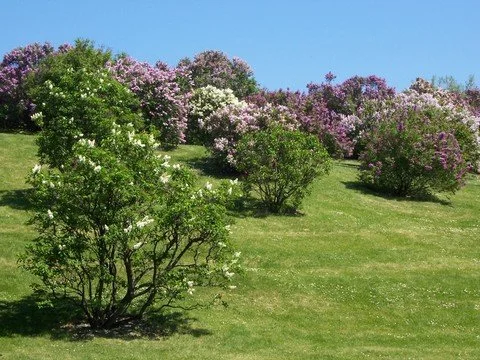
Lilacs at Highland Park.
Photo courtesy of The Landmark Society of Western NY.
Building One of the World's Greatest Lilac Collections
Although Highland Park was conceived as a broad arboretum showcasing many trees and shrubs, lilacs quickly became its defining feature.
In 1892, Highland Park horticulturist John Dunbar began planting lilacs throughout the park. His passion for the genus Syringa earned him the affectionate nickname "Johnny Lilacseed." Dunbar expanded the collection dramatically while also hybridizing and introducing new cultivars, including the deep blue 'President Lincoln,' still considered one of the finest blue lilacs ever developed.
His successor, Bernard H. Slavin, continued that work throughout the twentieth century, expanding and documenting the collection until Highland Park became home to the largest public collection of lilacs in North America.
Today, the park contains approximately 1,200 individual lilac plants representing more than 500 varieties, making it one of the premier destinations in the world for lilac enthusiasts.
Visitors strolling the collection encounter an extraordinary diversity of colors, fragrances, flower forms, and bloom times. Deep purples, soft lavenders, brilliant pinks, creamy whites, and even yellow-tinged blossoms create an ever-changing display. Bloom periods are intentionally staggered so that different cultivars flower over several weeks, extending the spectacle well beyond a single weekend.
Among the collection is the creamy white cultivar 'Rochester,' introduced in 1963 in honor of the city whose name has become inseparable from the beloved spring bloom.
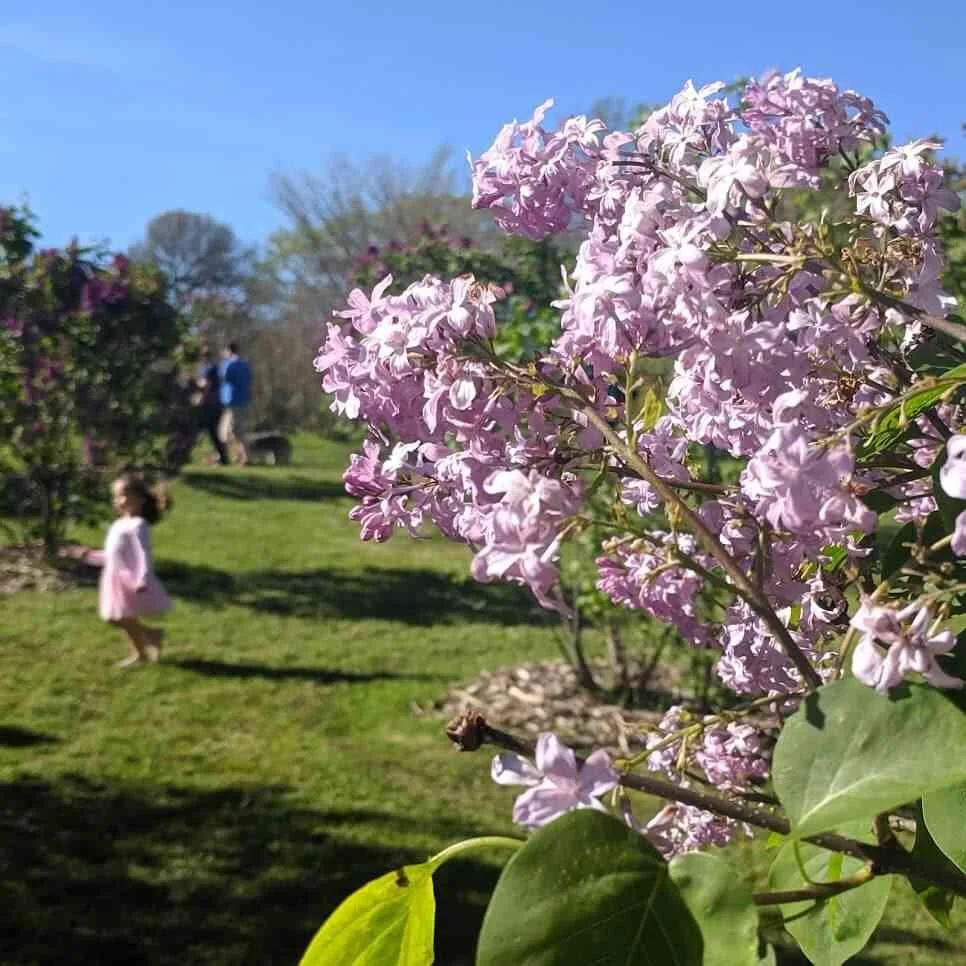
Patrons enjoying the lilacs in Highland Park.
Photo courtesy of Debie Bower, Day Trips Around Rochester.
From Lilac Sunday to an International Festival
The Rochester Lilac Festival did not begin with concert stages or food vendors. Instead, it grew naturally from the popularity of the collection itself. As the lilacs matured, residents began making informal spring pilgrimages to Highland Park simply to admire the blooms. By the late nineteenth century, thousands gathered during peak bloom for what became known as Lilac Sunday. The gathering evolved into an organized celebration as attendance continued to increase inthe early twentieth century.
Over the decades, the festival steadily expanded to include educational programs, horticultural exhibits, community events, art shows, family activities, local food, and nationally recognized musical performances. Today, it welcomes hundreds of thousands of visitors each year and is widely recognized as the largest free festival of its kind in North America.
Despite that growth, Quinn believes the flowers themselves remain the reason people return.
"I have always felt the festival was important because it draws in a lot of people who might not otherwise visit. They then have the opportunity to learn what a treasure they have."
That opportunity—to discover Highland Park itself—may be one of the festival's greatest successes. Many first-time visitors come for the entertainment but leave with a newfound appreciation for the park, its collections, and the vision that created them.
What Visitors Don't See
For festival-goers, the Rochester Lilac Festival lasts ten days.
For those who organize it, the work never really stops.
"There is a lot that goes into festival preparation," Quinn says. "In general, it starts right after the last year's festival ends."
Planning is coordinated through Lilac Festival Incorporated, a partnership that includes Monroe County, the City of Rochester, and Visit Rochester. A professional promoter is selected—typically for a three-year term—to oversee entertainment, vendor contracts, security, and marketing.
Meanwhile, Monroe County Parks staff begin preparing the park itself. They work alongside numerous city and county departments—including departments of public works, transportation, and multiple law enforcement agencies—to prepare infrastructure throughout the festival grounds. County Parks staff are also responsible for maintaining Highland Park's gardens, preparing planting beds, mowing, pruning, installing infrastructure, and ensuring the landscape is ready to welcome hundreds of thousands of visitors.
The complexity of today's festival would have been difficult to imagine only a few decades ago. Quinn vividly remembers the opening of the current festival site in 1986. "The original design never really anticipated how big the crowds would be," he recalls. "I guess we should have known, but we were surprised nonetheless."
Those crowds have only continued to grow.
Not considering himself "much of a music guy," Quinn laughs when recalling some of the performers who packed Highland Park. "I remember a group called Barenaked Ladies—I had never heard of them—that was the biggest crowd I ever saw in the bowl. That same year we also had Johnny Cash. Jeff Springut really did know how to book entertainment."
Those memories illustrate just how much the festival has evolved while remaining rooted in the landscape that inspired it.
A Community Effort
The festival would not be possible without volunteers. While some assist visitors during the festival itself through guided tours and educational programs, many more contribute quietly throughout the year by helping maintain Highland Park's nationally significant collections. Volunteer groups care for memorial gardens, remove invasive plants, weed planting beds, and help ensure the park remains beautiful for future generations. The Highland Park Conservancy has become an especially important partner, coordinating volunteers and supporting stewardship projects throughout the park.
One of the Conservancy's most successful initiatives is Love a Lilac, which invites individuals, families, and organizations to sponsor specific lilac plants within the collection. The program does much more than raise funds. As Quinn explains, the idea was to make the enormous responsibility of caring for more than 1,200 lilacs feel manageable. Rather than viewing the collection as one overwhelming task, volunteers can focus on individual plants, providing consistent care while developing a personal connection to Highland Park's living collection.
It is a simple concept that beautifully reflects the larger spirit of stewardship that has sustained the park for generations.
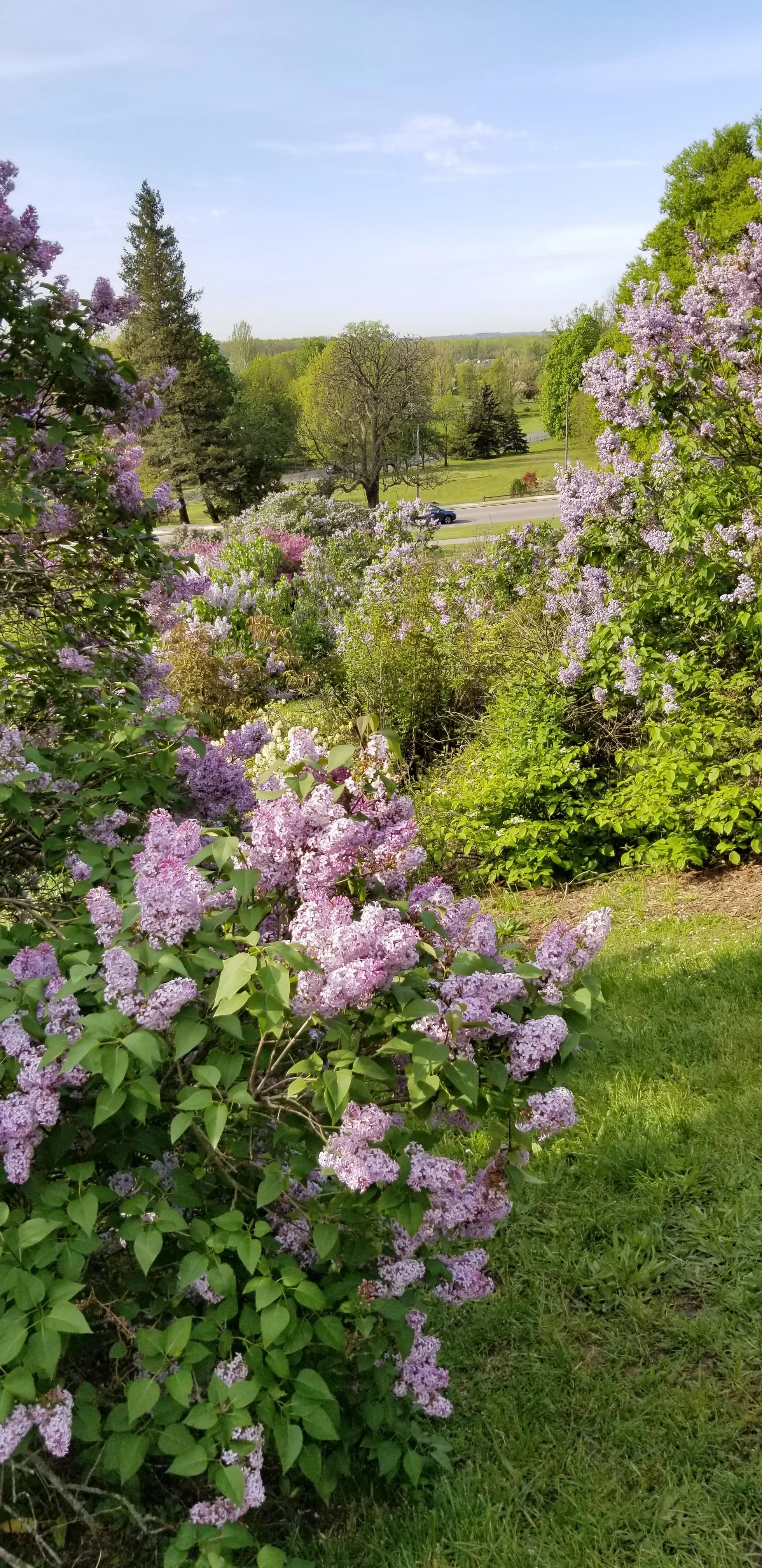
Lilacs at Highland Park.
Photo courtesy of Becky Timmons.
More Than Flowers
After nearly forty years caring for Monroe County's parks, Quinn says one thing still surprises him.
"I continue to be surprised by talking to people from the area who have never been to the park, the conservatory, or heard of Olmsted."
Perhaps that is why the Lilac Festival remains so important. Every spring, it introduces thousands of first-time visitors to one of Rochester's greatest public spaces. Some arrive for a concert, some for the food, others for photographs beneath blooming branches. Regardless of the reason, they experience exactly what Olmsted intended—a beautiful landscape that welcomes everyone.
Quinn's own reflections on his career echo that same philosophy.
"I was super lucky to have been able to have a career in parks. Early in life I thought it wouldn't be practical, but I guess I was wrong."
He continues:
“I always felt parks were super important to a community—something everyone can use to improve their lives. I appreciate the foresight of the people who made parks happen at all levels. Tax dollars well spent—something tangible that anyone can use."
Those sentiments could just as easily have come from Frederick Law Olmsted himself. More than 135 years after Highland Park was designed, it continues to fulfill his vision. It remains a place where horticulture, preservation, recreation, education, and community come together in one extraordinary landscape.
The fragrance of lilacs may last only a few weeks each spring, but the legacy they represent endures all year long. Long after the festival tents have been packed away and the last blossoms have fallen, Highland Park continues to remind us why public parks matter—and why caring for them is one of the greatest investments a community can make.